Niagara currently operates under a two-tier system of municipal government. This means there is an upper-tier government (Niagara Region) and 12 lower-tier municipalities, including the City of Welland.
Recent discussions across Niagara have focused on whether changes could make local government more efficient while maintaining the existing municipalities.
This page provides information about what is being discussed, who is involved, and what it could mean for Welland residents. The City of Welland is not responsible for deciding Niagara’s governance structure, but we are committed to keeping residents informed as discussions continue.
Public Meeting
Welland City Council will host a public meeting to provide residents with an opportunity to share feedback on potential governance reform in Niagara.
Date and time: Tuesday, March 24 at 6 p.m.
Location: Council Chambers, Welland Civic Square
How to register: Residents who wish to speak at the meeting must register with the City Clerk by emailing clerk@welland.ca.
- If you plan to present materials, such as slides or written comments, please submit them to the City Clerk no later than 8:30 a.m. on Monday, March 23.
- If you do not plan to use materials and only wish to speak, you can register until 12 p.m. (noon) on Tuesday, March 24.
Residents are also welcome to attend the meeting to listen to the discussion.
The meeting will be recorded and forwarded to the Premier, the Minister of Municipal Affairs and Housing, and the Regional Chair for consideration.
Why
Governance reform in Niagara has been discussed for many years.
Over time, provincial reviews, consultant reports, and independent studies have examined whether the current system creates duplication, slows decision-making, or increases costs.
In 2019, the Province of Ontario conducted a Regional Government Review that included Niagara. While no structural changes were made at that time, discussions about efficiency and coordination across municipalities have continued.
Proposed Approach
Recent discussions across Niagara have focused on improving coordination between municipalities while maintaining the current 12 municipalities.
A proposal submitted to the Province of Ontario outlines several potential changes aimed at improving efficiency and reducing the number of elected officials.
Key elements include:
- Regional Council composition
Regional Council would be made up of the 12 municipal mayors and a Regional Chair.
- Weighted voting
Voting at Regional Council would be weighted based on population in increments of 15,000 residents. This approach is intended to better reflect population differences while ensuring every municipality continues to have representation.
- Reduced local council sizes
Proposed council sizes beginning with the 2026 municipal term include:
- St. Catharines: 12 councillors plus the mayor
- Niagara Falls: 8 councillors plus the mayor
- Welland, Niagara-on-the-Lake, Thorold, Pelham, West Lincoln, Grimsby, Lincoln, Port Colborne and Fort Erie: 6 councillors plus the mayor
- Wainfleet: 4 councillors plus the mayor
- Exploring shared services
The Province may consider appointing a commissioner, or similar role, after the next municipal election to explore opportunities for municipalities to share services and identify further efficiencies across Niagara.
These ideas aim to streamline decision-making and reduce duplication while maintaining the independence and identity of Niagara’s 12 municipalities.
Welland's Role
The City of Welland does not have the authority to change Niagara’s governance structure. Any changes would require action by the Province of Ontario.
At this stage:
- Discussions are happening across Niagara about potential governance changes.
- The Province would ultimately determine whether any structural changes move forward.
- Welland City Council continues to monitor developments and advocate for the interests of Welland residents.
The City will continue to share updates as more information becomes available.
What This Means for You
At this time, there are no changes to how municipal services are delivered.
Welland continues to operate under the existing two-tier system with Niagara Region and the 12 local municipalities.
Any governance changes would require provincial legislation and would take time to implement.
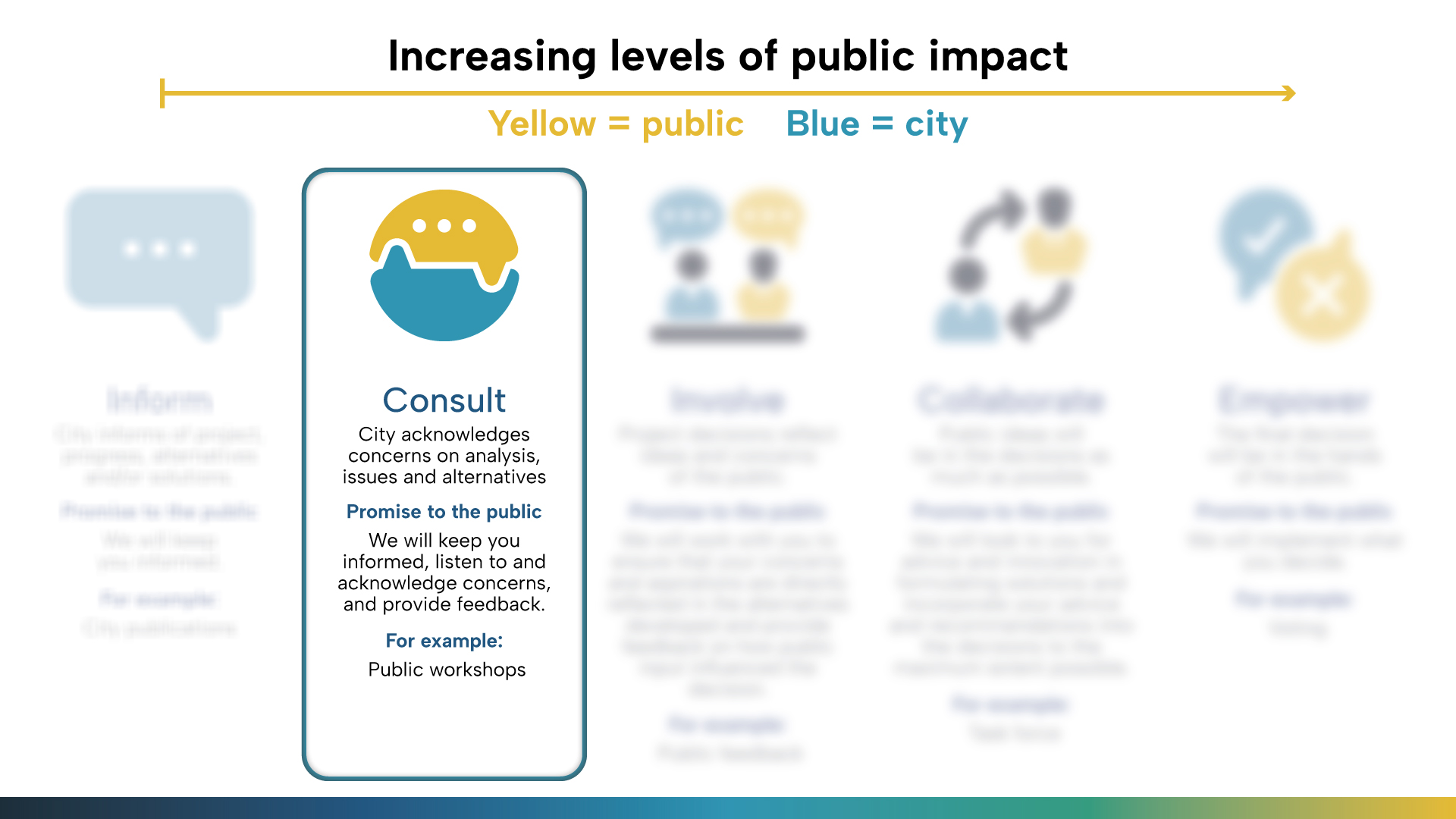
Where we are on the engagement spectrum